)

Song of the month: "Under pressure" by Queen and David Bowie
Bond yields did most of the talking in September, and equities felt every word. In our Market at a glance, we look at what happens when the cost of money keeps rising while share prices refuse to come down, and at the mountain of debt sitting behind the yields.
Then, with our partners at PLUS, we unpack the Swiss National Bank's fifth hold at 0.00%, and why the real news this time is in the inflation forecast, not the rate.
Enjoy the read.
Table of Contents
Key takeaways
Bonds did the talking. The German 10-year touched 3.52%, its highest since 2009, and 10 year US yields pressed toward 5%.
Equities held on but stopped climbing. Valuations, above all in the United States, are now arguing with the cost of money.
Behind the yields sits the debt. US federal debt crossed USD 40 trillion in August, and interest is now Washington's second-largest expense.
Oil back above USD 100 kept inflation in the picture, the dollar firmed, and digital assets had a quieter month.
At home, the SNB held at 0.00% for the fifth time and raised its inflation forecast. The rate is unchanged. The direction is not.
Anyone who has carried a rucksack up the Salève knows the moment. Nobody has added anything to the pack, and yet somewhere past the halfway mark it starts to weigh more. Nothing changed except the climb. That is how September felt for markets: the same companies, the same earnings, the same AI story, and a load that kept getting heavier.
The weight has a name. It is the cost of money. As bond yields climbed to levels most of us had filed under history, equities were asked a question they had managed to avoid all summer: how much is a share worth when the alternative pays five percent for doing nothing?
Queen and David Bowie wrote «Under pressure» as an argument between two voices, one pleading, one insisting. Read it as equities and bonds and you have the month.
What happened with equities
Let's start with what did not happen: equities did not fall apart. After a strong summer, global markets lost momentum rather than ground. The reason was not earnings, which stayed robust, and not the AI theme, which still carried the US indices. The reason was the number next door.
When a government bond pays close to 5%, the maths of a share changes. Future profits are worth less today, and the investor who wants income has somewhere else to go. Historically that combination has cooled equity valuations. What made September uncomfortable is that, in several segments of the US market, valuations did not cool. They stayed stretched while the yields underneath them rose. That is a rare pairing, and rarely a stable one.
Europe had it harder. Higher bond yields compressed multiples, and the European Central Bank raised rates again in September. Within the indices the picture was uneven: energy stocks rose with the oil price, banks benefited from higher rates, and most of the rest waited.
So the month ends with a tension rather than a verdict. Elevated valuations on one side, persistently high yields on the other, and a growing number of investors asking how long the two can share a room.
What happened with bonds
September was a bond market month. Inflation worries resurfaced, the economic data refused to weaken, and investors reassessed how long central banks will stay tight. Government bond yields rose across most major economies.
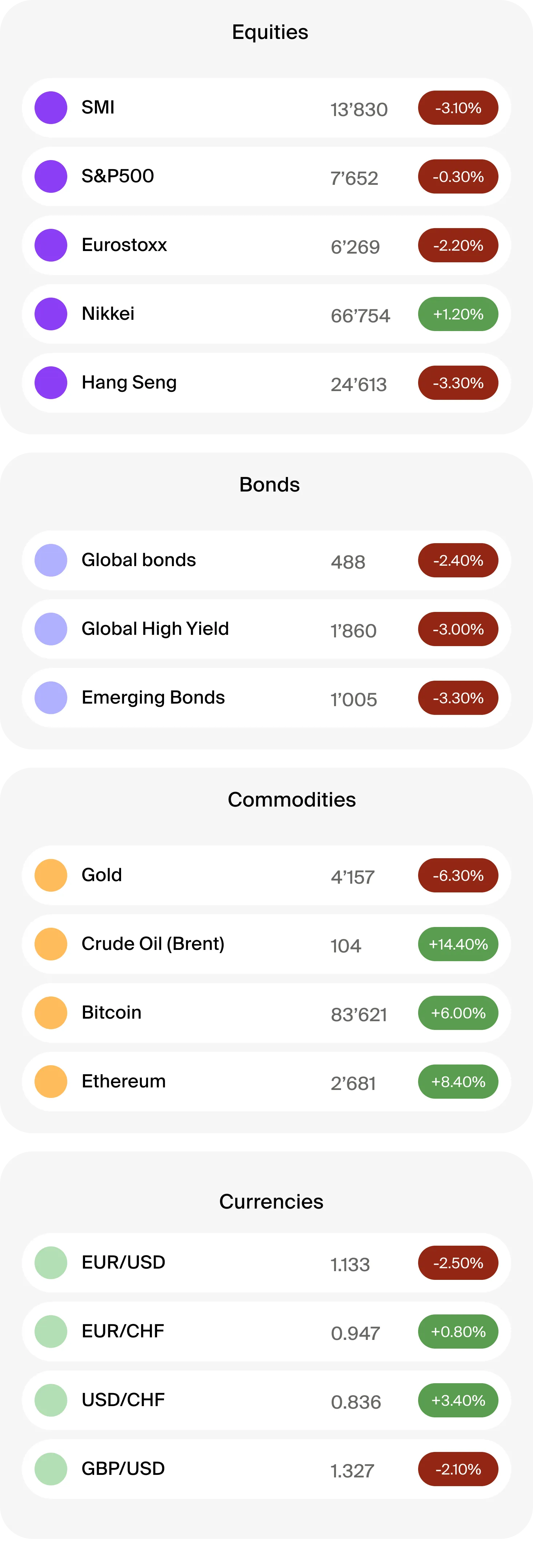
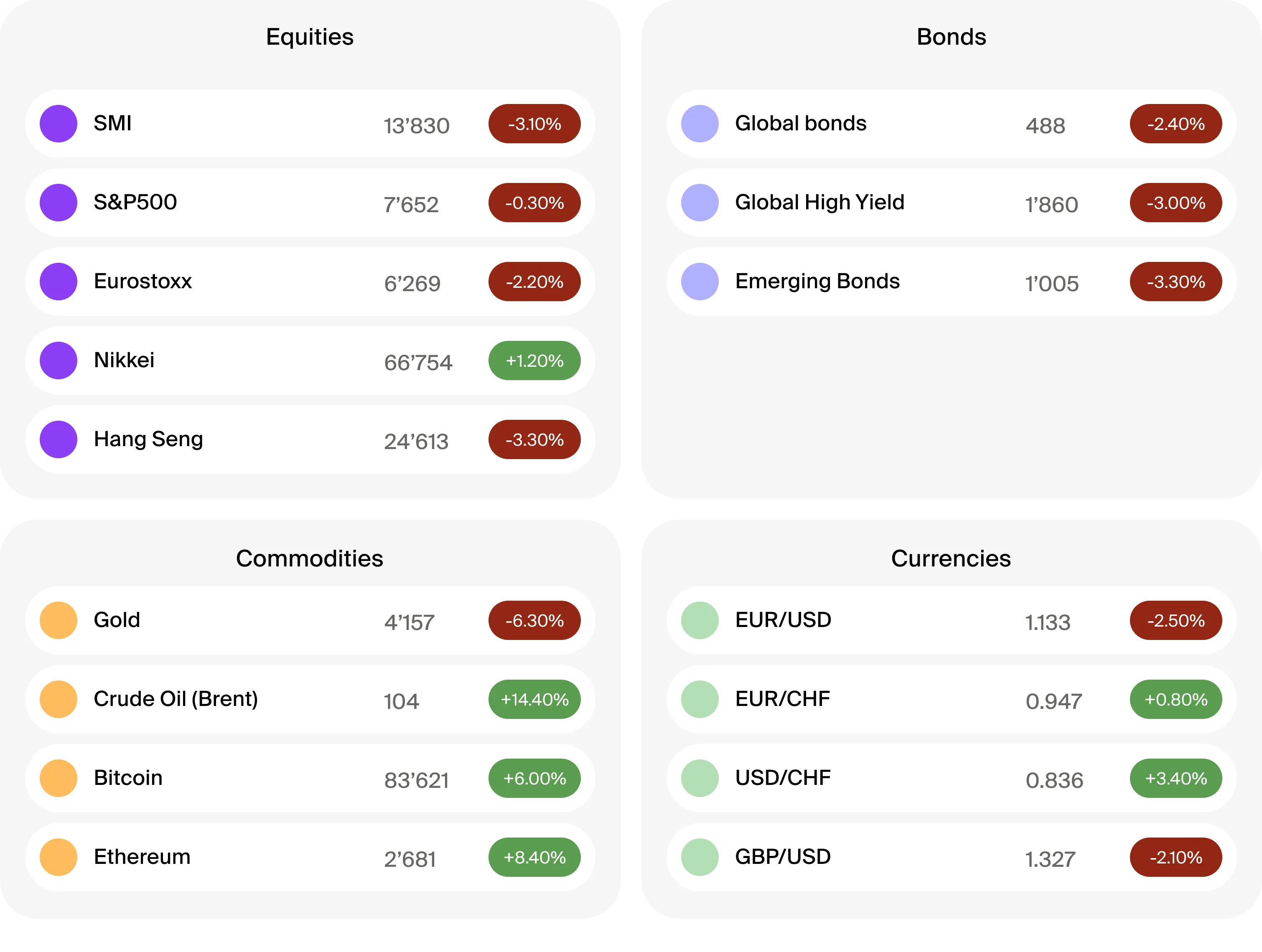
In the United States, 10 years Treasury yields pressed toward 5%. In Germany, the 10-year Bund reached 3.52% on 14 September, a level last seen in 2009. Britain's gilts moved in the same direction. Rising yields pull bond prices down, and this month they pulled at everything else too: they were the single largest driver of returns across asset classes.
Step back a little and the story is older than September. Since the 2008 financial crisis, and again through the pandemic, governments spent heavily to keep their economies standing. It worked. It also left a bill.
In the United States, federal debt crossed USD 40 trillion in August, from about USD 11.9 trillion at the end of fiscal 2009. That is around 124% of the country's output. The deficit remains above USD 2 trillion a year with the economy near full employment, an unusual combination in modern economic history. Across the developed world, ageing populations, rising social spending and the energy transition keep adding to the financing need.
What has changed is the price of that borrowing. Interest rates are well above where they sat for the decade after 2008, and a growing share of tax revenue now goes to paying interest rather than to anything else. In Washington, interest is already the second-largest line in the budget, behind only Social Security.
Where equities say "growth is fine, look at the earnings", bonds reply "and who is paying for it?"
What happened with commodities, currencies, and digital assets
Oil stayed at the centre of the picture. Tensions around the Strait of Hormuz, the artery through which a large share of the world's seaborne oil passes, pushed Brent back above USD 100 a barrel as investors priced in the risk of disruption. Expensive energy also feeds the inflation worry that keeps central banks cautious, which brings us back to the bonds.
Interest in other commodities followed. Gold, industrial metals and energy drew attention from investors looking for assets that do not depend on a central bank's printing press. It is worth being clear about what that interest is: a reaction to doubt about the purchasing power of money, not a guarantee of protection. Commodities move sharply in both directions, and gold in particular has spent much of this year reminding late buyers of that.
In currencies, higher US yields supported the dollar against most major peers. Digital assets had a quieter month after a strong August; higher returns on conventional assets mean more competition for the same capital, and the asset class remains among the most volatile there is.
What should investors take away?
First, the pressure is real and it is coming from bonds, not from equities. Watch yields before you watch share prices.
Second, pressure is not the same as a break. Periods in which yields rise while equities hold have, more often than not, resolved through yields coming back down rather than through a market collapse. That is history, not a promise.
Finally, the pack is heavier because the climb is longer, not because anyone added weight overnight. A portfolio built for the whole route, with both voices in it, tends to arrive.
)
)
Alpian: SNB holds at 0.00% for the fifth time, but inflation changes the picture
Article written in collaboration with PLUS, a Swiss expert in accounting, tax, insurance and mortgages.
On Thursday 24 September, the Swiss National Bank once again held its policy rate at 0.00%. It is the fifth consecutive pause at this level. Behind the apparent stability, one issue is back in focus: inflation, pushed up again by rising oil prices.
What are the key takeaways from the September decision?
Disclaimer: Investments involve risks, including the possible loss of invested capital. The value of investments can fluctuate and there is no guarantee of making profits or avoiding losses. Diversification does not ensure a profit or protect against a loss. Potential investors should consult a qualified financial advisor before making any investment decisions. Please read the full risk warnings and other relevant documents on our website before investing.


)

)

)